Diaphonization
Clearing and staining specimens to show bone and cartilage.
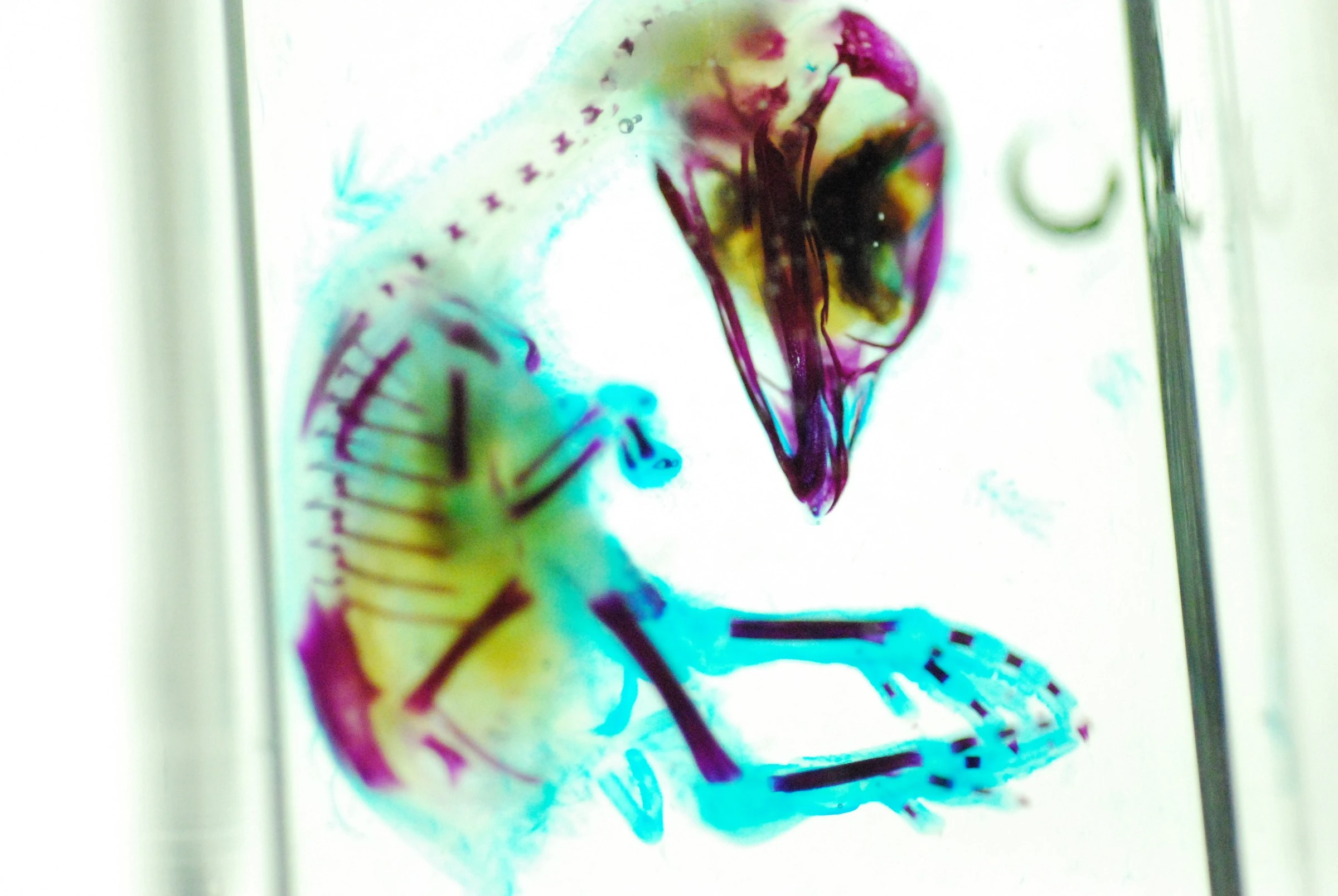
Several years ago, I was inspired by some images I saw on a design blog’s e-newsletter. Iori Tomita, a Japanese ichthyologist, had composed a work he called New World Transparent Specimens. These illuminate a new world - one to which you may never have been privy.
I was completely blown away by the level of anatomical detail shown, and started looking into the process of creating these works of art. Diaphonization, or clearing and staining, is essentially a process through which tissue is turned transparent, cartilage is stained blue, and bones are stained red. I found that it is used to study anatomy and that there are standard protocols for performing this process in the lab, with only a few special chemicals required. Of course, I immediately turned to my lab’s PI to get the ingredients.
It was not nearly as cut-and-dry as we often hope lab protocols will be. Many of the steps in the overall process are quite forgiving, but you really must understand the rationale behind each step and the interaction between steps in order to not mess up the sequence of things and the resulting specimen.
I often compare the laboratory to the kitchen. Cooks and scientists alike will browse existing protocols, taking note of reagents and methods used and try to understand how each of the steps contributes to the final product. Then, the best scientists (and cooks) combine the best practices from several different existing protocols, customized and enhanced to suit their own situation, to create a result that could never be produced in cookie-cutter fashion.
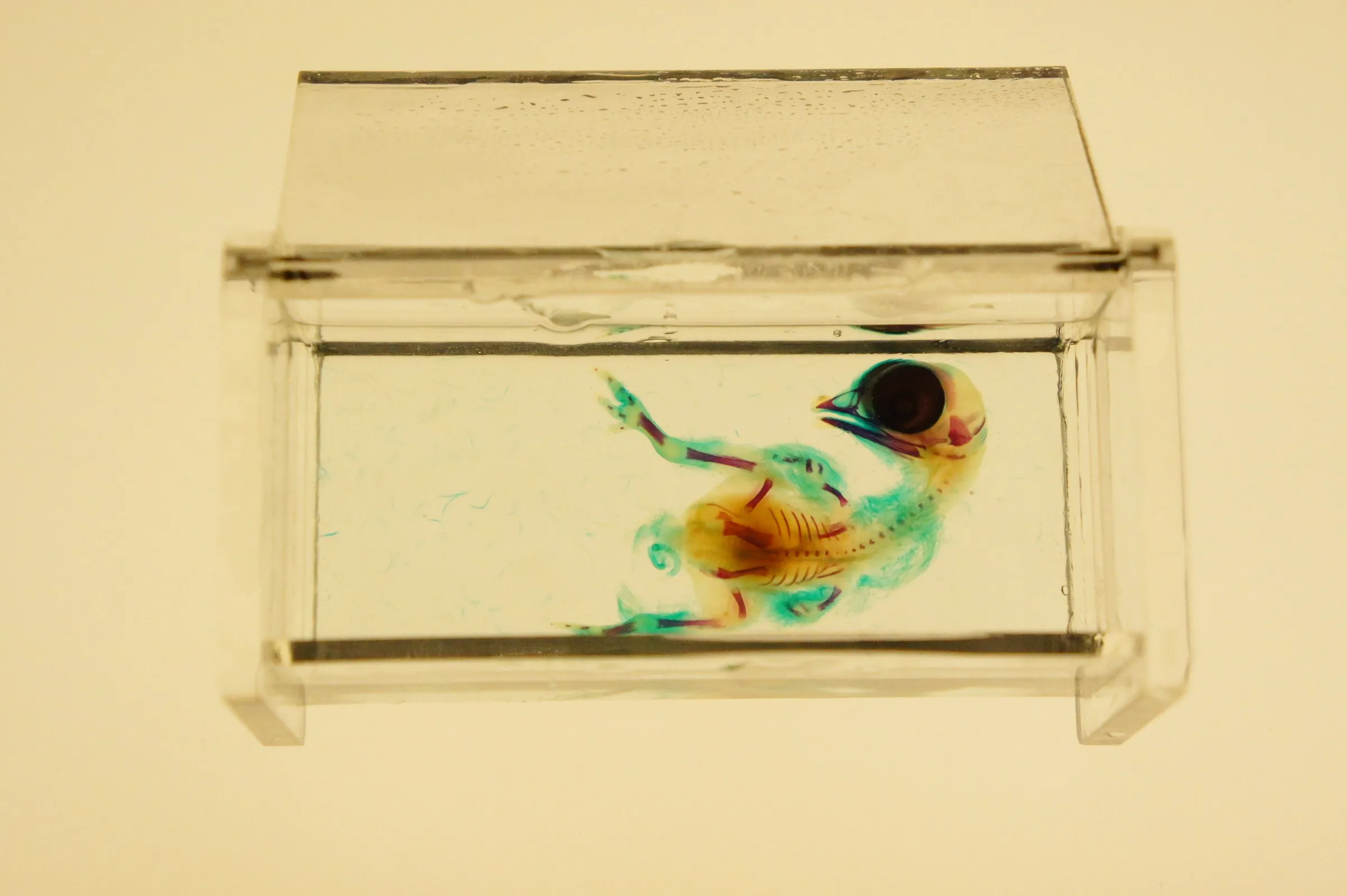
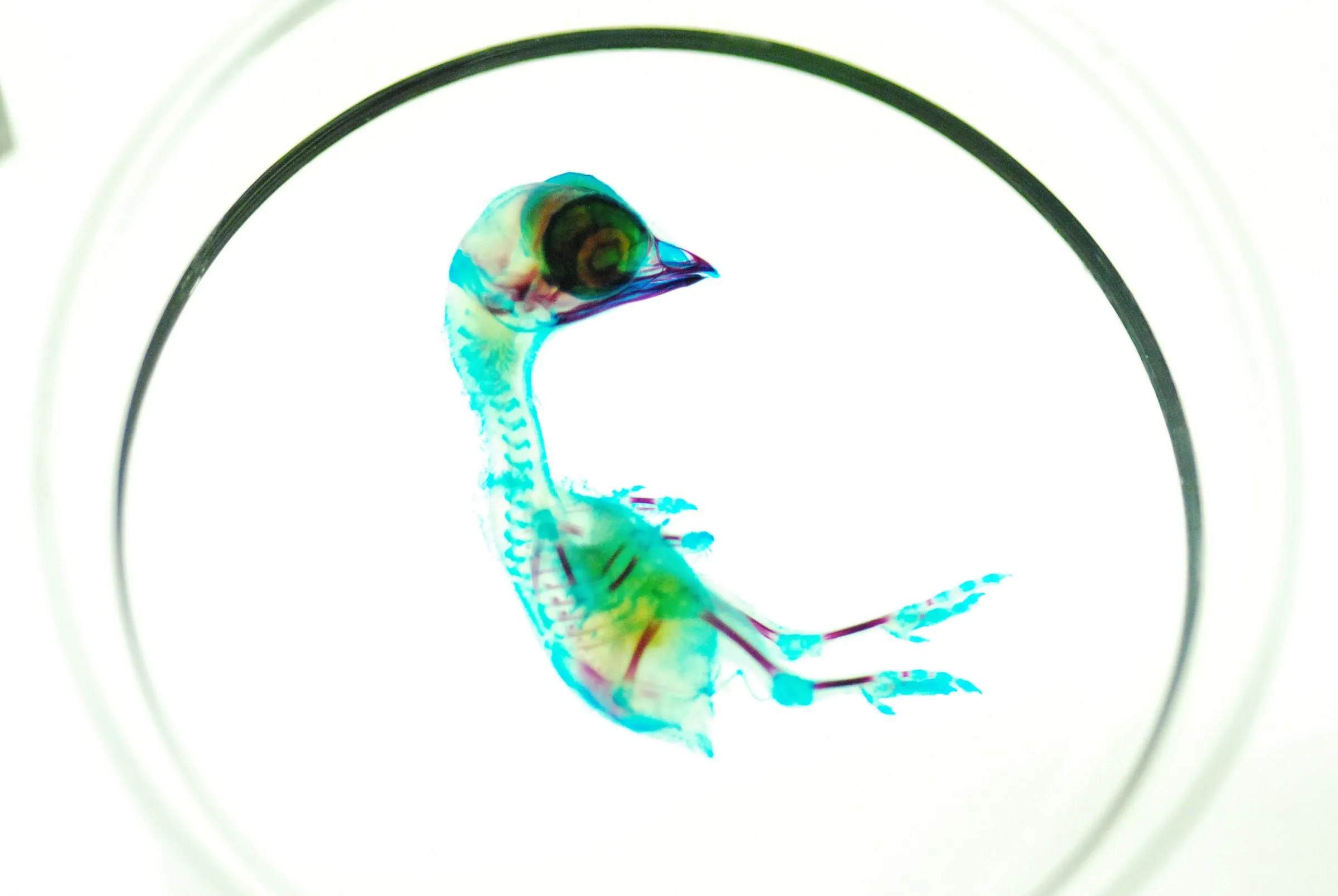
The clearing and staining process is definitely an art. It is a time-consuming and painstaking process, and the slightest mistake can ruin a month’s work (and perhaps an irreplaceable specimen) in an instant. But seeing nature’s beauty revealed in such an amazing way makes all the effort worthwhile.
Budget macro photography is a post for another day.