Clay smoker
A ceramic smoker with a PID controller and a SIM card.
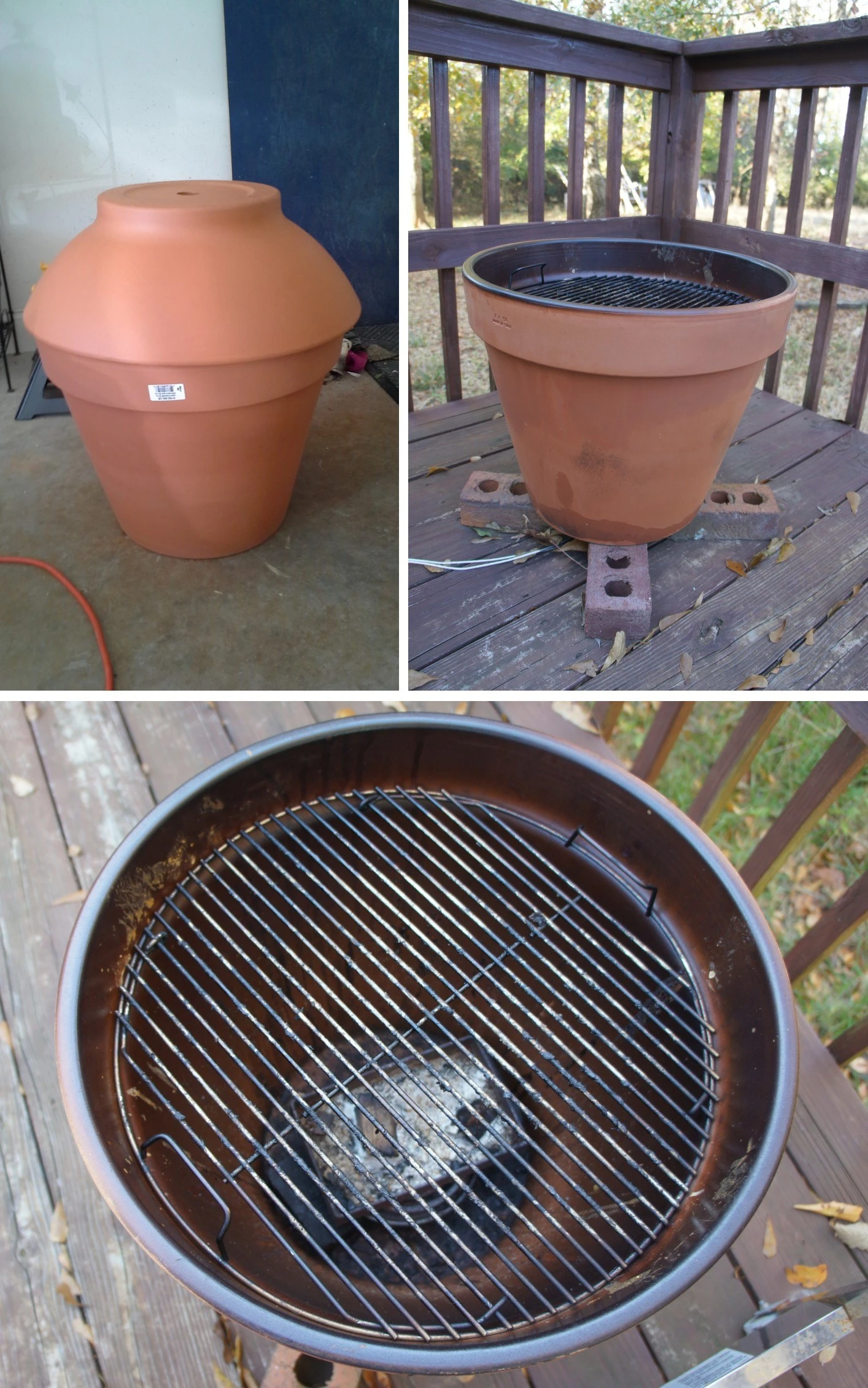
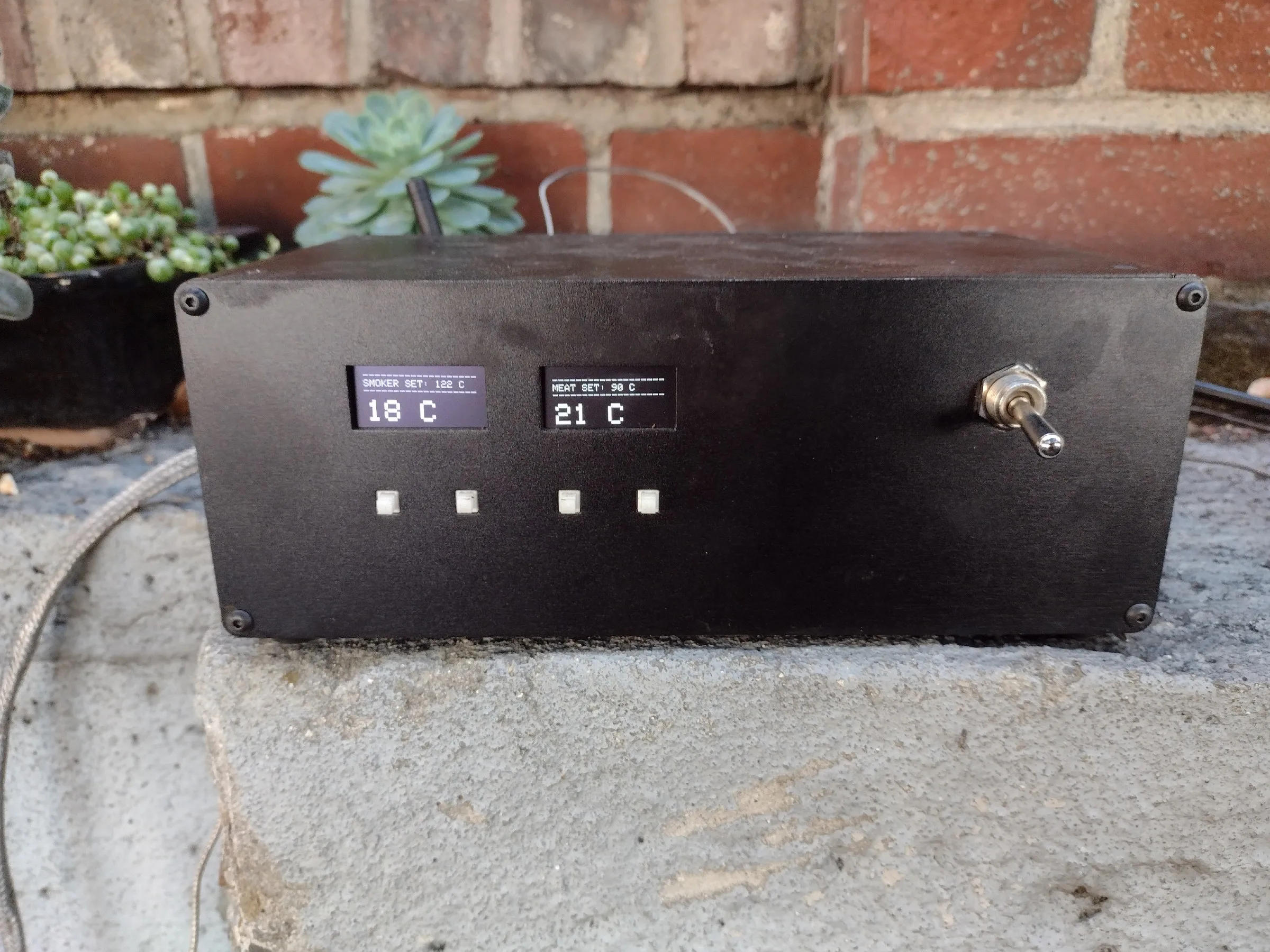
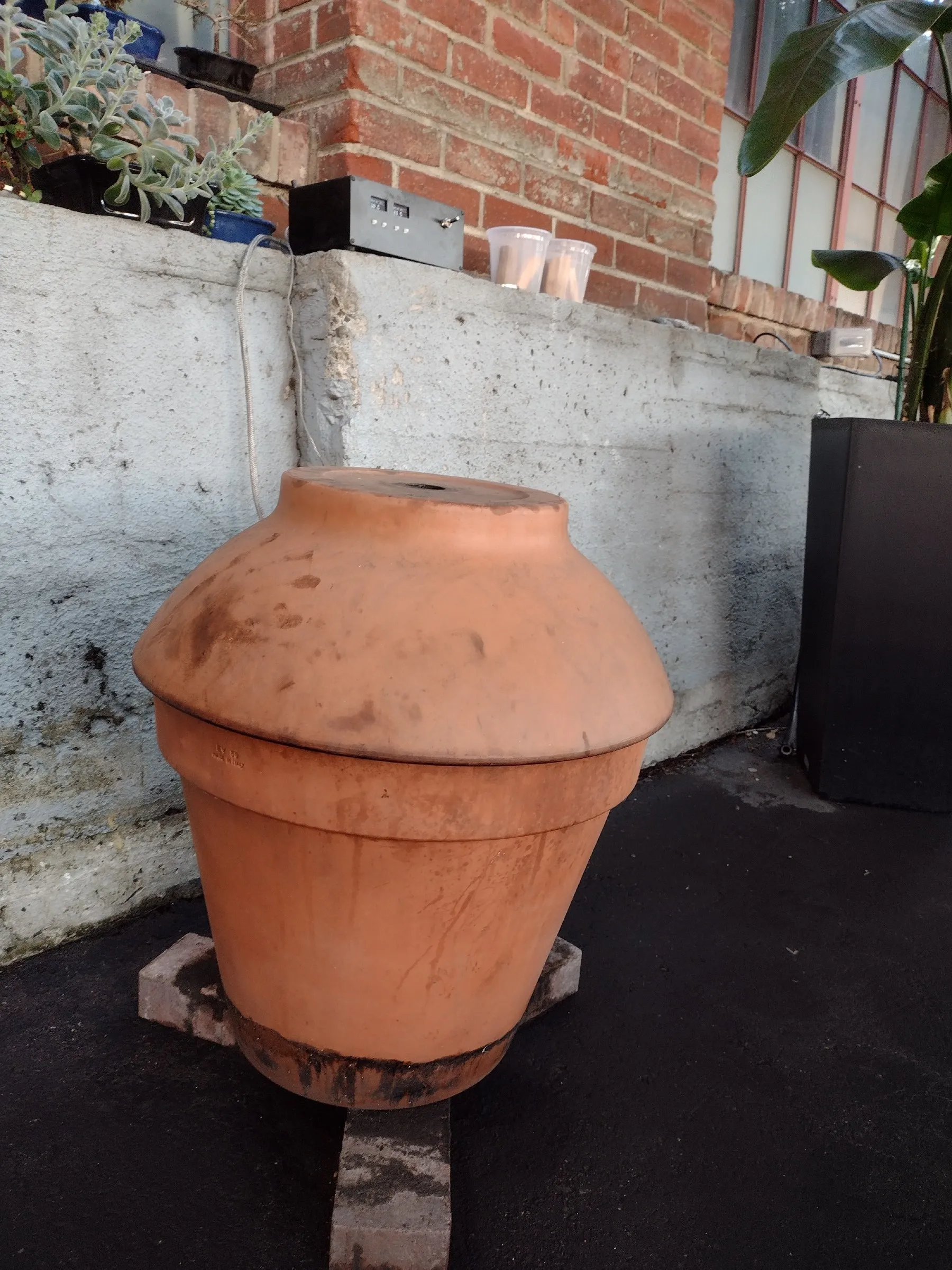
When it comes to home smokers, everyone wants a ceramic unit - their heat retention is unparalleled, meaning it takes less fuel, less smoke, and less of your attention to cook the same mass of food. Kamado-style smokers and the well-known Big Green Egg are ultra-high-end, and their prices show it. I was inspired by an episode of Alton Brown’s show, Good Eats, to develop my own solution with what I could source. However, I needed my smoker to be large enough to hold two full racks of pork back ribs (about 18” long racks), a couple of pork butts, or a medium sized turkey.
The single hardest task was finding somewhere near Athens or Atlanta that sold enormous, unglazed terra cotta flower pots. As an academic researcher, I have pretty well-practiced Google-fu, but it took me several weeks to find a 19.75” diameter pot, a ‘low bowl’ that nests with the pot (for the lid), and a grill grate that perfectly fits the inner lip of the pot. I found the bowl at a local pottery yard but I had to order the pot from simplyplanters.com ($70 including shipping).

Local pottery yard, full of proud elephants.
Grill grate fits like a damn glove.
While ribs are a relatively fast-cooking cut of meat like steaks, beef brisket, a delight I had never cooked before, is a very slow-cooking cut. If done properly, smoking a whole point or flat of brisket would take upwards of 12 hours and I did not want to have to actively tend the smoker all day.
Since the smoker has an electric heating element, I realized some sort of thermostat could solve the problem (set it and forget it!). My research turned up the versatile PID controller, an off-the-shelf microcontroller that uses an advanced algorithm to maintain the programmed temperature parameter without overshooting - perfect for achieving and maintaining a low smoking temperature. I initially learned of the idea from Seattle Food Geek - he had already utilized a PID for sous vide - and I adapted the electrical design to suit my needs. I wanted to make a modular controller box with a clean design to allow quick swapping of hardware components like heating elements (if I ever chose to dabble in sous vide).
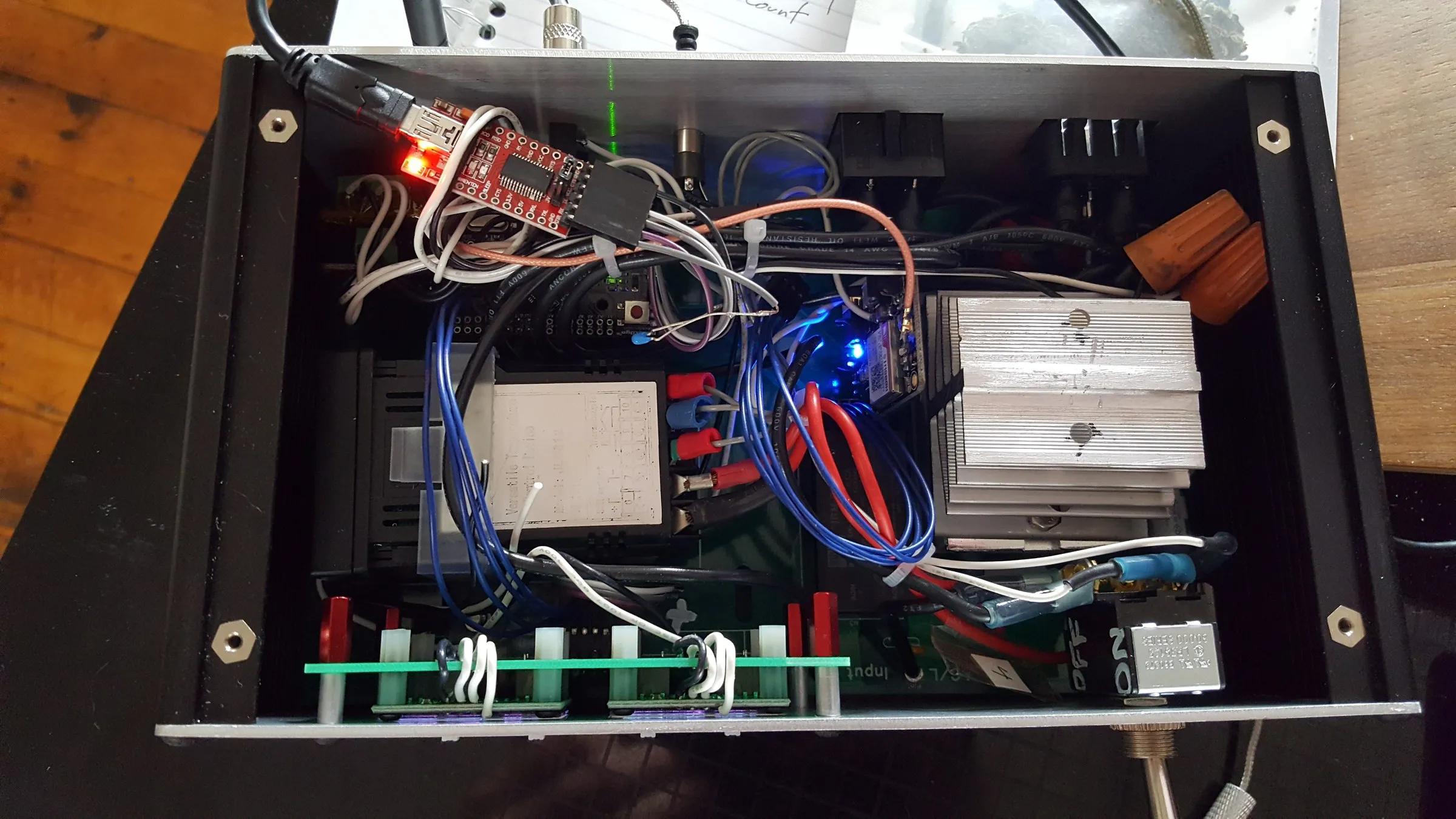
I got all the electronics together and tested everything - not on a breadboard, because of the scale of components, but on a piece of cardboard. I ensured all wiring and connectors near or inside the smoker were high-temperature rated and then started looking for a case. I wanted the unit to be as small as possible, while providing adequate heat dissipation for the solid state relay. Off-the-shelf ABS enclosures, or ‘project boxes,’ looked cheap and ugly and were priced much too high for what you get. Aluminum enclosures I found were always too large or too small and hugely expensive. And with either, I would have to worry about cutting holes for various components: the female AC socket, the GFCI outlet, the PID controller, and the toggle switch.
The PID controller software requires one-time calibration (re: set the temperature and select the auto-tune function) to your smoker’s internal volume and choice of heating element. Once this is done, just select your cooking temperature and add a couple of hardwood chunks to the pan every 3-4 hours. I typically get an overshoot of less than one degree Celsius.
Some Southern BBQ purists don’t care for electric smokers, but they can’t argue with these results. I’d bet my brisket on it.
Version 2
- The controller grew up: 120 V heating elements switched by an SSR, RTD probes, and PID control on an ATmega2560.
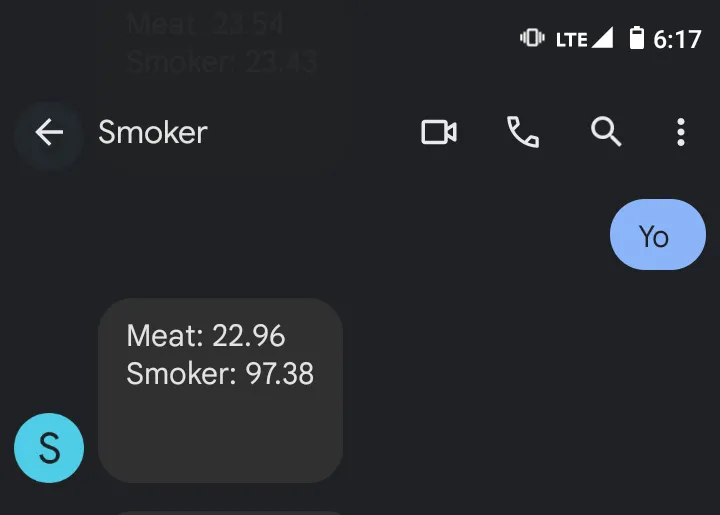
- Dual OLED front panel, and a cellular module (SIM800 / FONA) that texts when it needs attention.
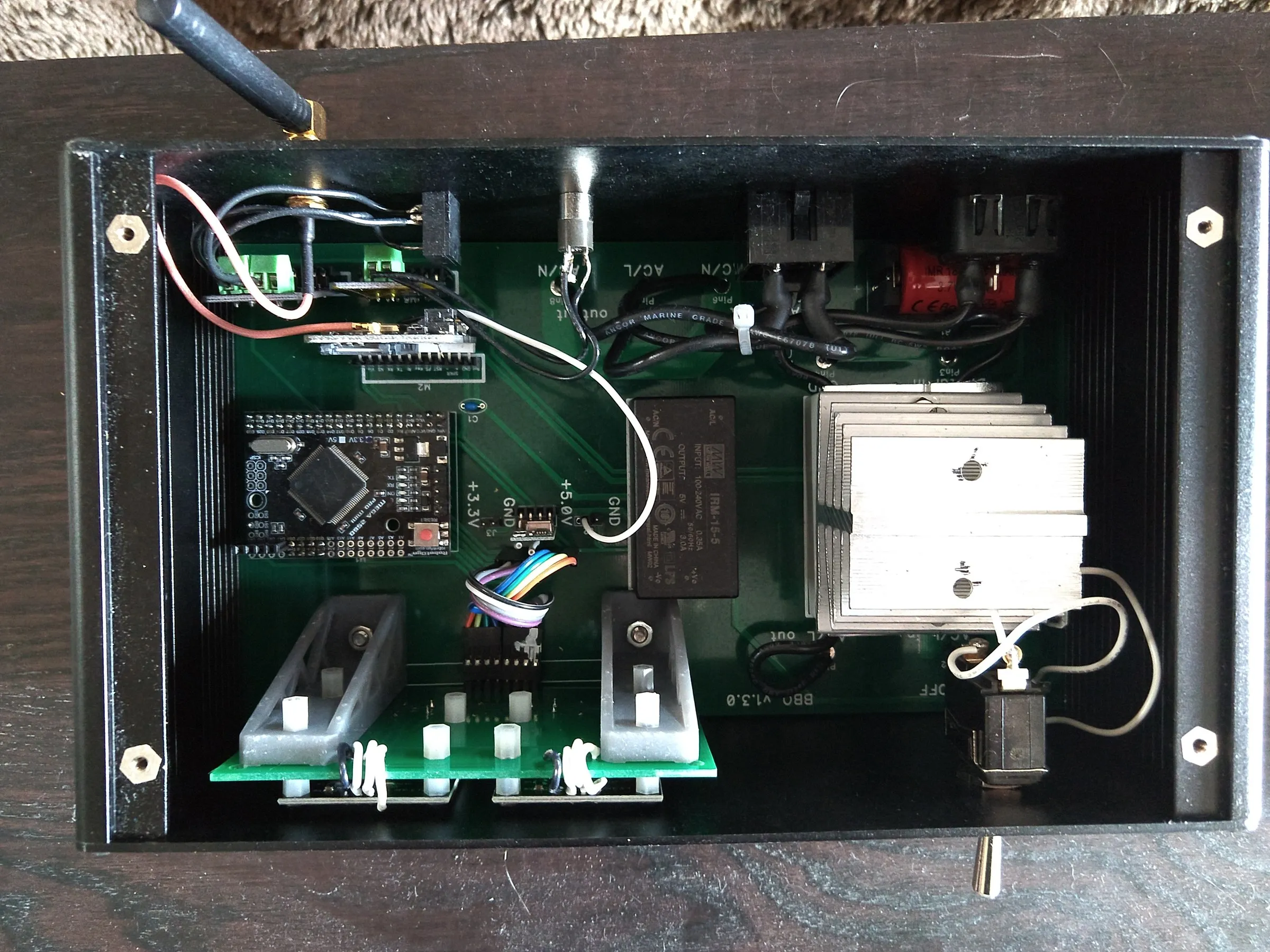
- Irregular updates are replacing the cast iron smokebox tray. It gets rusty over time left out in the elements. The hot plate heating element being upgraded. proper crimps, proper spade terminals on the heating element wire, and now that I am in California and I’m at an apartment building rather than having my own backyard and deck in the south in a house, rats chewed through the power cable, and thank god I had a fuse on the control box. My safety measures kicked in and worked perfectly. I was able to discover the issue. There’s a stainless steel braid on the power cable itself.
- to-do items, some means of catching grease, which is kind of up in the air because one of the greatest things ever is pork fat. As pork is smoking, the pork fat dripping down on the hardwood and sizzling, adding to the flavor. But then again, you have a whole brisket or a whole pork butt, and it is too much pork fat, and it gunks up, and you need regular cleaning.
- Really, at some point, actually upgrading to a proper big green egg or similar would solve my problem. I made an adapted version of this for my friend who does have a big green egg. Probably no super expensive ceramic smoker until I get a house with my own backyard though…